 Figma
Figma API
API Web to code extension
 Adobe XD
 Discord
 Twitter
 GitHub


 Blog
Blog
Figma to HTML: How to export a Figma design into HTML5 min read
Reading Time: 4 minutesFigma to HTML plugin & online
Anima is one of the most popular ways to turn Figma to HTML. With Anima, you can export Figma designs as responsive HTML and CSS in seconds, including single frames, components, landing pages, or full user flows.
Export clean, semantic, editable front-end code directly from the Figma plugin or by pasting a Figma link into Anima Playground online.
Whether you need a quick HTML export from Figma, a responsive landing page, or production-ready front-end code, Anima helps designers and developers move faster from design to code.
How to convert Figma to HTML and CSS
Anima offers two easy ways to convert Figma designs into HTML and CSS, whether you need quick code snippets, responsive websites, landing pages, or multi-screen flows.
1. Paste Figma designs into Anima Playground and export HTML
Best for: Non-designers, fast prototypes, responsive websites, vibe coding, and quick HTML exports.
- Go to Anima Playground.
- Copy and paste any Figma frame using Cmd/Ctrl + L.
- Select your preferred framework or styling options.
- Preview the live responsive HTML output.
- Download clean, editable HTML/CSS code instantly.
2. Use the Figma plugin to export HTML code inside Figma
Best for: Designers, developer handoff, multi-screen flows, UI components, and responsive front-end export.
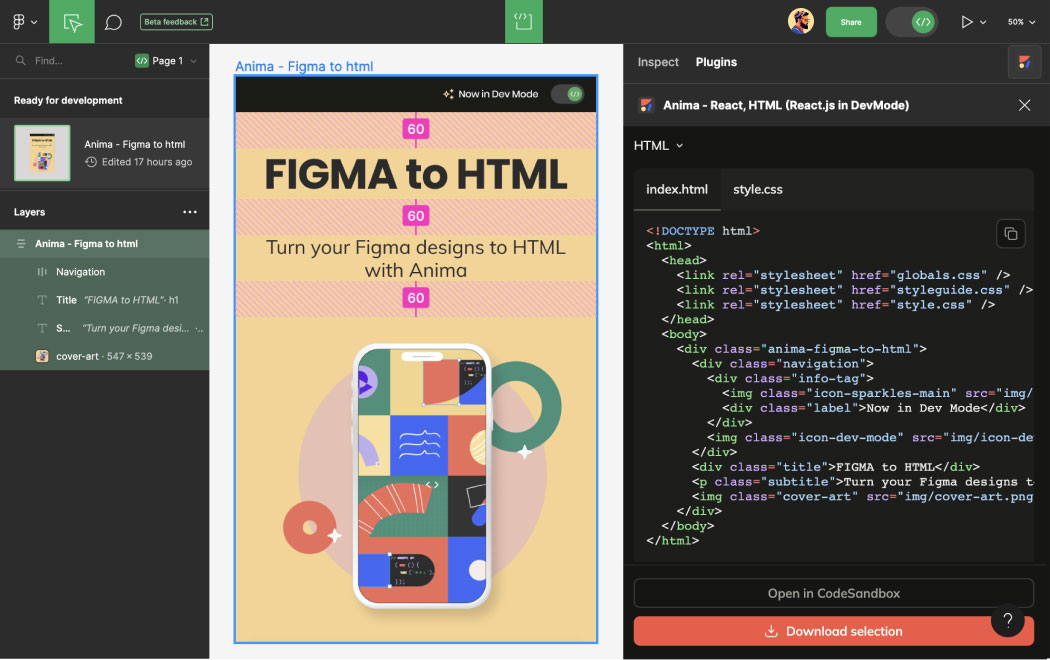
- Open the Anima plugin in Figma, in Edit Mode or Dev Mode.
- Select a component, section, or frame.
- Preview the generated HTML and CSS live.
- Copy the generated code or download the full code package.
What should a good Figma to HTML converter include?
A good Figma to HTML converter should do more than recreate screenshots in code. It should preserve layout structure, responsive behavior, assets, and semantic HTML so developers can continue building from the exported result.
- Responsive HTML/CSS: Auto Layout and breakpoints should translate into real responsive behavior.
- Clean semantic HTML: Export readable, structured, developer-friendly code.
- Editable CSS: Styles should remain maintainable after export.
- Asset handling: Images, icons, and fonts should export with the project.
- Live preview: Preview the generated front-end before downloading code.
- Developer handoff: Exported code should support real implementation workflows.
Why convert Figma to HTML?
Figma is excellent for design and prototyping, but exporting usable HTML is where many teams lose time. Manual coding introduces delays, inconsistencies, and bugs. With Anima, teams can go directly from Figma to semantic HTML and clean CSS.
- Preview live HTML without rebuilding layouts manually.
- Generate responsive front-end code faster.
- Export responsive landing pages and websites from Figma.
- Share real code-based prototypes with stakeholders.
- Accelerate MVP delivery by skipping repetitive UI implementation.
- Focus developers on business logic instead of rebuilding static layouts.
- Turn Figma designs into editable HTML/CSS that fits real development workflows.
Why semantic HTML matters
Semantic HTML improves accessibility, SEO, maintainability, and developer workflows. Instead of exporting flat or screenshot-like structures, semantic HTML uses meaningful tags like <header>, <section>, <nav>, and <button>.
With semantic HTML output, teams get cleaner DOM structures, more accessible front-end code, and a better starting point for real product development.
Learn more here: What is semantic HTML?
What’s included in the exported code package?
When you export HTML from Figma with Anima, the downloaded package includes the structure, styling, assets, and optional scripts needed to continue building the project.
| File | Description |
|---|---|
index.html |
Structured semantic HTML layout generated from your Figma design |
styles.css |
Responsive CSS, layout behavior, and styling rules |
/assets |
Fonts, images, and icons used in the design |
/scripts |
Optional JavaScript interactions depending on export settings |
Customize your HTML with AI
After converting Figma to HTML, you can continue editing and refining the result with AI inside Anima Playground. Instead of manually updating every layout, class, or style, you can prompt Anima to modify the code and preview the result live.
- Add semantic HTML and ARIA tags automatically.
- Adapt output for Tailwind, Bootstrap, or vanilla CSS.
- Match framework naming conventions.
- Generate animation hooks and logic-ready snippets.
- Extend or refine generated front-end code using prompts.
More here: Vibe coding from Figma in Anima Playground
Figma to email-compatible HTML
Need HTML that works across Gmail, Outlook, and other email clients? Anima supports inline CSS output for email workflows, helping teams export email-compatible HTML from Figma more easily.
- Select “Email-compatible” in the export settings.
- Preview layouts inside Anima Playground.
- Generate inline CSS for major email clients.
- Export email-ready HTML directly from Figma.
Manual Figma to HTML vs using Anima
You can convert Figma to HTML manually, but it often requires rebuilding every layout, style, responsive behavior, and asset by hand. Anima automates much of this repetitive front-end work.
| Workflow | Manual coding | Anima |
|---|---|---|
| Layout recreation | Developers rebuild screens manually | Generates HTML/CSS from Figma automatically |
| Responsive behavior | Requires manual CSS and media queries | Uses Auto Layout and breakpoints for responsive output |
| Assets | Managed manually | Included in the exported project |
| Speed | Hours or days depending on complexity | Often completed in minutes |
| Best use case | Complex production engineering | Landing pages, MVPs, prototypes, websites, and developer handoff |
Benefits of using Anima for Figma to HTML
| Feature | Advantage |
|---|---|
| Responsive code | Auto Layout and breakpoints translate into responsive HTML/CSS |
| Semantic HTML | Readable, developer-friendly DOM structure |
| Editable CSS | Maintainable front-end styling after export |
| Speed | Move from Figma to working front-end code faster |
| AI customization | Adapt code for frameworks, accessibility, and styling preferences |
| Flexible workflow | Export from the Figma plugin or continue editing in Anima Playground |
| Vibe coding | Prompt updates and instantly translate changes into HTML code |
Why teams use Anima for Figma to HTML
Anima is used by designers, developers, and product teams to move faster from Figma designs to code. It supports plugin workflows inside Figma, browser-based editing in Anima Playground, responsive HTML export, and developer handoff through downloadable front-end code.
Unlike screenshot-based export tools, Anima focuses on semantic HTML, responsive layouts, editable CSS, and developer-friendly code generation.
Use Anima when you want to convert Figma into real front-end code, export responsive websites, share live prototypes, or give developers a cleaner implementation starting point.
Start converting Figma to HTML
FAQs on Figma to HTML Conversion
Yes. Use Anima Playground in your browser at AnimaApp.com - Simply paste a link to Figma to turn it into HTML or React code.
Yes. Designs with breakpoints or auto-layouts automatically generate responsive HTML/CSS. Breakpoints allow you to have css media queries and jump between two layouts (two frames).
Yes. Enable "Email-compatible" mode to receive inline-styled HTML in Anima's Figma plugin.
Yes. You get clean, editable code ideal for handoff or integration. No div salad or useless span.